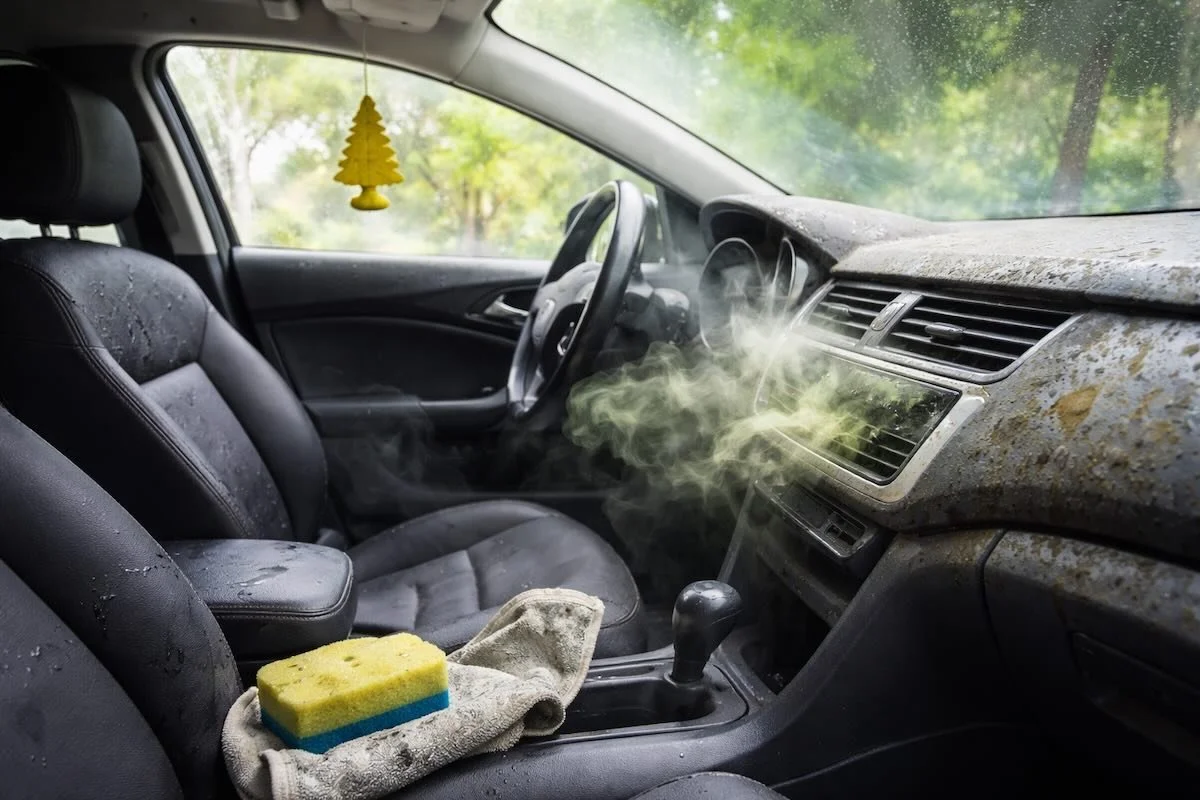
You open your car door, and you notice it at once – a slight, stale, musty smell, which shouldn’t be there. You clean the dashboard, clean the seats, spray an air freshener and temporarily the scent disappears. Then a few days later, it’s back again.
This is a constant aggravation to many car owners. The car appears to be tidy, but the smell does not go away. What people fail to realise is that a lingering stale odour is hardly ever a matter of cleanliness. It is a red flag of some underlying issue lurking within the car on most occasions.
Rodent activity and trapped moisture are two of the most common causes. They both may exist freely during weeks or even months before any apparent damage is noticed. The smell is often ignored, which normally makes the situation worse and costly to fix and also may cause health hazards. If you own an Audi and are facing such issues, it’s crucial to consult a qualified Car Mechanic service in Newcastle to identify and fix the root cause.
Why a Musty Odour in Your Car Is More Than Just a Smell
Mostly, a foul odour is an indication of organic substances decomposing in a limited area. Cars give the pests and the moisture precisely the type of habitat that they require, and that is dark, warm and sheltered and hardly touched in some places.
Rodents are quite prevalent in vehicles, especially the ones that are parked outdoors, as well as those parked close to vegetation or even cars that have been abandoned over a considerable period of time. Meanwhile, the spills, the rainwater leakages, or the humidity can soak into the carpets and padding.
Common hidden causes include:
- Rodents nesting under seats, in the engine bay, or inside air vents
- Moisture trapped beneath carpets or soundproofing
- Mould and mildew growing inside upholstery or ventilation systems
- Mouse droppings or urine embedded into fabric and insulation
In case these problems exist, they will not be fixed by surface cleaning. The odour persists due to the fact that the source has not been taken care of.
The Role of Rodents in Creating Persistent Car Odours
Rodents don’t need much space to invade a vehicle. Mice, in particular, can squeeze through gaps as small as a few centimetres, entering through the undercarriage or engine bay.
Once inside, they settle in areas that are warm, quiet, and difficult to access. Common nesting spots include:
- Air filter housings
- Behind the dashboard
- Under the rear seats
- Inside door panels
- Engine compartments
Rodents leave behind urine, faeces, fur and nesting material. The odour of rodent urine is particularly strong and is likely to seep into cloth, wiring insulation and air-conditioning parts. It contaminates the car by giving an unpleasant smell of ammonia when mixed with food remains or nesting materials, which quickly diffuses all over the vehicle.
When unaddressed, the problem can hardly be limited to smell. Rats cut wiring, destroy insulation and interfere with safety systems. This is why early intervention in rodent pest control is important. Other services, like Rodent Pest Control, specialise in managing the infestation as well as dealing with the contamination.
Clear Signs of Rodent Activity Inside Your Car
While smells are often the first clue, other warning signs indicate rodents may already be present.
Look out for:
- Small droppings under seats, in cup holders, or inside the glove compartment
- Chewed wires or exposed insulation near pedals or under the bonnet
- Gnaw marks on upholstery, seat foam, or door trims
- Shredded paper, fabric, or leaves used as nesting material
- Yellowish urine stains near vents, carpets, or storage compartments
In case you observe any of those signs, you should not wait. Rodents reproduce so fast, and the longer they stay, the more destruction they cause. Professional assistance, e.g., Mouse Control, is aimed at nest-finding, re-entry prevention, and decreasing the long-term risk.
How Moisture Creates the Perfect Environment for Odours
Pests are not the only cause of all the musty odours. The influence of moisture is significant either independently or alongside rodent activity.
However, it is cars that are especially susceptible to the presence of hidden moisture since liquid does not always vaporise once it gets under the surface. Common moisture sources include:
- Spilled drinks that soak into carpets
- Wet shoes or clothing placed inside the car
- Leaking door or window seals
- Blocked air-conditioning drains
- High humidity combined with poor ventilation
Once the moisture gets trapped under upholstery or carpet backings, moulds and mildew start to develop. These fungi emit spores that have a damp, earthy odour and may cause allergy or respiratory disorders.
The presence of rodents also hastens the problem when they are present. Nesting substances absorb the liquid, bacteria propagate more quickly, and odours are much more persistent. Solving one aspect of the problem does not often solve the smell.
This is where integrated solutions by experienced Pest Control Service providers would be of importance, since they consider environmental factors with pest activity.
Why Air Fresheners and DIY Cleaning Don’t Work Long-Term
Air fresheners do not eliminate the odour. When the source is covered by the carpets, inside vents or behind the panels, the smell will always come back once the fragrance fades.
DIY cleaning methods often fail because:
- They don’t reach contaminated insulation or padding
- They don’t remove urine-soaked materials
- They can’t safely access ventilation systems
- They don’t prevent rodents from returning
In other instances, cleaning may propagate the contamination even further, especially in cases when droppings or the disturbed nesting contents are vacuumed without proper care.
Addressing the Root Cause Before Damage Escalates
The main clue to eradicating a car odour is to find out the cause. When the rodents are concerned, they cannot be deterred by mere cleanup of the inside. In case of moisture, it should be completely dried, and the cause should be corrected.
Professional assessment ensures:
- Rodent entry points are identified and blocked
- Nests and contamination are safely removed
- Ventilation systems are inspected
- Moisture sources are addressed
- Long-term prevention strategies are put in place
Timely intervention can easily forestall more severe consequences, including electrical and physical damage to the interior, or health hazards due to years of exposure to mould or rodent droppings.
Conclusion: Your Car Is Warning You for a Reason
A persistent musty smell is not something to ignore. It is your automobile speaking that something is under wraps. It may be rodents, moisture or both, but the problem is not going to go away.
As soon as the underlying problem is noticed, the easier and less expensive it is to fix it. The untimely waiting usually results in massive repairs, continued odours and unwarranted stress.
FAQs
Ques 1) Why does my car smell musty even after cleaning?
Ans) Because the source is not normally visible. Rat infestation or moisture under the carpet or in the ventricles may still emit a smell even after cleaning the surface.
Ques 2) Can rodents really live inside cars?
Ans) Yes. Warmth and shelter are offered by cars that are parked outside or when not used. Some of the usual nesting sites include engine bays, dashboards and seats.
Ques 3) Is rodent urine dangerous inside a vehicle?
Ans) It can be. Rodent urine can be a source of bacteria and allergens that affect the atmosphere and health, especially in confined conditions such as motor vehicles.
Ques 4) How can moisture get trapped in my car?
Ans) Spills, leaks, blocked drains, or humid conditions can allow moisture to seep into padding and insulation where it doesn’t dry properly.
Ques 5) Will the smell go away on its own?
Ans) No. Without removing the source, whether pests or moisture, the smell usually becomes stronger over time.
Ques 6) When should I seek professional help?
Ans) If the odour persists, worsens, or is accompanied by signs of rodent activity or dampness, professional inspection is the safest and most effective option.